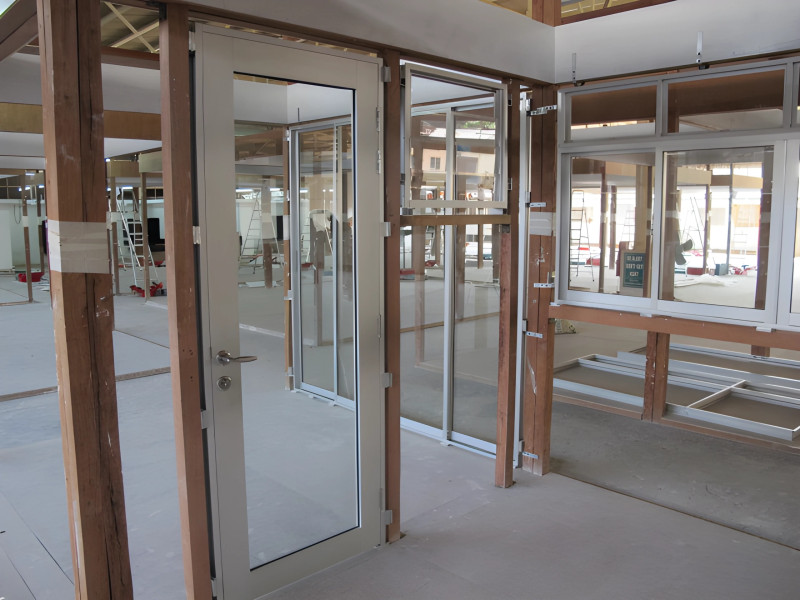
Doors and Windows installation(Aluminum)
Aluminum Doors and Windows Installation Instructions
Tools & Materials Needed:
Aluminum doors/windows frame and sash
Measuring tape
Level
Drill and drill bits (masonry and metal)
Screws and anchors (appropriate for wall type)
Silicone sealant or weatherproof sealant
Screwdriver
Shims (plastic or wooden)
Hammer and nails (if needed for temporary securing)
Safety gloves and glasses
Step 1: Preparation
Inspect the Opening:
Ensure the rough opening (wall cutout) is clean, square, and level.
Check dimensions of the opening to confirm they match the door/window frame size, allowing a small clearance (typically 1/4” to 1/2”) for adjustment.
Remove old window/door (if replacing):
Carefully remove the old frame and clean the opening, removing debris, old sealant, and nails.
Step 2: Dry Fit the Frame
Place the aluminum door/window frame into the opening to check the fit.
Use a level to ensure the frame is plumb (vertical) and square.
Use shims to adjust the frame until it is perfectly aligned and level.
Step 3: Secure the Frame
Drill pilot holes through the aluminum frame into the wall at designated fixing points. Usually, there are pre-drilled holes on the frame for screws.
Insert anchors if the wall is masonry or concrete.
Screw the frame securely into the wall. Start from the top, then sides, and bottom last.
Continuously check the frame is level and square as you tighten the screws. Adjust shims as needed.
Step 4: Seal the Frame
Apply a continuous bead of silicone or weatherproof sealant around the exterior perimeter of the frame where it meets the wall.
Ensure there are no gaps to prevent water infiltration.
Step 5: Install the Door/Window Sash
Fit the sash (the movable part of the window or door) into the installed frame.
Check the operation—open and close smoothly without rubbing or gaps.
Adjust hinges or rollers if necessary.
Step 6: Interior Finishing
Use trim or molding to cover gaps between frame and wall on the interior side.
Apply sealant or foam insulation around the interior frame gap for energy efficiency and air sealing.
Clean the glass and aluminum surfaces to remove fingerprints and dust.
Additional Tips:
For large doors/windows, consider using two people for handling and installation.
Always wear safety equipment.
Follow manufacturer-specific instructions and use recommended hardware for best results.
Check local building codes for compliance regarding fastening and sealing requirements.